Can I Use Invisalign If I Have Veneers?

Many people who have veneers may wonder whether they can still use Invisalign to straighten their teeth. The short answer is: Yes, but with some considerations. Invisalign can be an effective treatment for those with veneers, but it requires careful planning and professional assessment to ensure the best results. In this article, we will explore how Invisalign interacts with veneers, the potential risks, and the best practices for undergoing orthodontic treatment while preserving your dental restorations.

How Invisalign Works

Invisalign uses a series of clear aligners to gradually shift teeth into their desired positions. These aligners are custom-made and are worn over the teeth, applying gentle pressure to move them over time. Unlike traditional braces, Invisalign is removable, making it a convenient and discreet option for orthodontic treatment.

Can You Use Invisalign If You Have Veneers?

The answer largely depends on the following factors:

1. Condition of Your Veneers

Veneers are bonded to the front surface of teeth, and their durability plays a key role in determining whether Invisalign is a suitable option. If your veneers are in good condition, Invisalign may be a viable choice, but weak or damaged veneers could be at risk during treatment.

2. Type of Tooth Movement Needed

If only minor adjustments are required, Invisalign may be effective without affecting the veneers. However, for more complex movements, such as rotating teeth or significant shifts, additional precautions may be needed.

3. Bonding Strength

Veneers are attached to the teeth with strong dental adhesives. If the bond is weak, the pressure from Invisalign aligners could potentially loosen or dislodge the veneers. A thorough dental evaluation is essential before starting treatment.

Potential Risks of Using Invisalign with Veneers

1. Veneer Damage

Excessive force from aligners could lead to veneer fractures or detachment.

2. Uneven Tooth Movement

Veneers may slightly alter the shape of teeth, affecting how the aligners fit and how the teeth shift.

3. Need for Refinements

In some cases, minor refinements may be necessary to ensure the best alignment while preserving the veneers.

Best Practices for Using Invisalign with Veneers

1. Consult with an Experienced Orthodontist

A professional evaluation can help determine if Invisalign is suitable for your case.

2. Choose a Conservative Approach

Gradual tooth movement reduces the risk of damaging veneers.

3. Consider Alternative Treatments

If Invisalign is not ideal, other orthodontic options such as retainers or limited braces may be recommended.

10 “People Also Ask” Questions

1. Can Invisalign damage veneers?

Yes, but only if excessive force is applied. A skilled orthodontist can minimize this risk.

2. Can you get veneers after Invisalign treatment?

Yes, many patients opt for veneers after Invisalign to enhance their smile.

3. Do Invisalign attachments work on veneers?

Attachments typically do not bond well to veneers, so alternative techniques may be needed.

4. Will Invisalign work if I have composite bonding instead of veneers?

Yes, but a dental evaluation is required to ensure bonding strength.

5. Can Invisalign fix gaps if I already have veneers?

It depends on the gap size and veneer placement. A dentist can assess the best approach.

6. Is Invisalign cheaper if I have veneers?

No, the cost remains the same as standard Invisalign treatment.

7. Do I need new veneers after Invisalign?

Not necessarily, but minor refinements may be needed depending on tooth movement.

8. Will Invisalign stain my veneers?

No, but maintaining good oral hygiene is essential to prevent discoloration.

9. Can I wear Invisalign if I have crowns instead of veneers?

Yes, Invisalign can be used with crowns, but the treatment plan may require adjustments.

10. How do I care for my veneers during Invisalign treatment?

Regular cleaning, avoiding hard foods, and using a soft-bristled toothbrush can help maintain veneers.

10 FAQs

1. Can Invisalign correct an overbite if I have veneers?

Yes, but the severity of the overbite will determine the treatment approach.

2. Will Invisalign cause sensitivity if I have veneers?

Some mild sensitivity may occur, but it is usually temporary.

3. Can Invisalign be used on only a few teeth with veneers?

Yes, Invisalign can target specific teeth while keeping veneers intact.

4. How long does Invisalign take if I have veneers?

The duration depends on the complexity of the case, usually 6-18 months.

5. Should I get my veneers replaced before or after Invisalign?

Most dentists recommend getting veneers after Invisalign for the best fit and alignment.

6. Will Invisalign affect my bite if I have veneers?

A well-planned treatment ensures proper bite alignment without compromising veneers.

7. Can I remove my Invisalign trays easily with veneers?

Yes, but care should be taken to avoid excessive force that may impact the veneers.

8. Are there special Invisalign trays for patients with veneers?

Aligners are customized, but adjustments may be needed for optimal fit.

9. Can I switch from traditional braces to Invisalign with veneers?

It depends on the case. A dentist can determine if switching is feasible.

10. What happens if my veneer breaks during Invisalign treatment?

Your dentist can replace the veneer and adjust the aligners accordingly.

Conclusion

Using Invisalign with veneers is possible, but it requires careful planning and expert guidance. If you are considering Invisalign treatment and already have veneers, consult with an experienced orthodontist to develop a customized approach. With the right strategy, you can achieve a straighter smile while preserving the integrity of your veneers. If you have any concerns about Invisalign treatment and already have veneers, consult your Weymouth dentist near you, please visit Comfort Dental Weymouth, 47 Washington St, Weymouth, MA 02188, (781) 337-3300.

Emergency Filling Repair For Broken Tooth

A broken tooth can be a painful and stressful experience, especially if it involves a lost or damaged filling. Seeking emergency filling repair for a broken tooth in Weymouth, MA can help prevent further damage and alleviate discomfort. Whether your tooth was chipped, cracked, or the filling fell out unexpectedly, timely treatment is crucial to restore function and protect your oral health.

Signs You Need an Emergency Filling Repair

If you experience any of the following symptoms, it’s important to seek urgent dental care:

  • Sharp pain or sensitivity to hot, cold, or sweet foods
  • Visible cracks or chips in your tooth
  • A missing or loose filling
  • Swelling or infection near the affected tooth
  • Discomfort when biting or chewing

What Causes a Broken Tooth or Lost Filling?

Several factors can contribute to tooth damage, including:

1. Decay Under a Filling

Over time, fillings can weaken, and decay can develop underneath them, causing them to fall out.

2. Biting on Hard Foods

Chewing on hard substances like ice, nuts, or candy can cause fillings to crack or break.

3. Teeth Grinding (Bruxism)

Habitual grinding or clenching can put excessive pressure on teeth, leading to fractures or lost fillings.

4. Trauma or Accidents

A fall, sports injury, or other trauma can damage teeth and dislodge fillings.

5. Natural Wear and Tear

Dental fillings are durable but not permanent. Over time, they can wear down, necessitating replacement.

Emergency Filling Repair Options

1. Temporary Fillings

If you cannot see a dentist immediately, a temporary dental filling from a pharmacy can provide short-term relief.

2. Composite Resin Fillings

Tooth-colored composite fillings restore the function and appearance of a broken tooth.

3. Dental Crowns

If a significant portion of the tooth is damaged, a dental crown may be necessary for added protection and strength.

4. Root Canal Therapy

For deep fractures exposing the nerve, a root canal may be required before placing a permanent filling.

What to Do If You Have a Broken Tooth in Weymouth, MA

Follow these steps to manage discomfort before seeing a dentist:

  • Rinse your mouth with warm salt water to prevent infection.
  • Use dental wax or sugar-free gum to cover sharp edges and prevent irritation.
  • Avoid chewing on the affected side to prevent further damage.
  • Take over-the-counter pain relievers to manage discomfort.
  • Call a local emergency dentist in Weymouth, MA for prompt treatment.

Cost of Emergency Filling Repair

The cost of a tooth filling repair varies depending on factors such as material type, severity of damage, and location. Prices typically range between $100 and $500 for composite fillings, while crowns or root canals may cost more.

People Also Ask

1. How long can I wait to fix a broken tooth?

It’s best to seek immediate dental care to prevent further damage or infection.

2. Can I fix a broken filling at home?

Temporary filling kits can provide short-term relief, but professional dental treatment is necessary.

3. Will a broken tooth heal on its own?

No, dental damage does not heal naturally. A dentist must repair it.

4. Can I eat after an emergency filling repair?

Yes, but avoid hard or sticky foods for the first few hours.

5. Is emergency filling repair covered by insurance?

Many dental insurance plans cover emergency procedures. Check with your provider for details.

6. What happens if I don’t repair a broken tooth?

Untreated damage can lead to infection, decay, or further fractures requiring more extensive treatment.

7. How long does an emergency filling last?

A temporary filling lasts a few weeks, while a permanent filling can last 5-10 years or more.

8. Can a filling fall out again?

Yes, especially if the tooth is weakened. Regular dental check-ups help ensure its longevity.

9. Does an emergency filling hurt?

Most procedures are pain-free with local anesthesia.

10. Can I drink alcohol after a filling repair?

It’s best to avoid alcohol for at least 24 hours to ensure proper healing.

FAQs About Emergency Filling Repair

1. How quickly should I see a dentist for a broken tooth?

Ideally, as soon as possible, especially if you’re experiencing pain.

2. Can I brush my teeth after an emergency filling?

Yes, but gently brush around the repaired area to avoid irritation.

3. Are there different types of dental fillings?

Yes, common materials include composite resin, amalgam, gold, and ceramic.

4. How long does an emergency dental visit take?

Most procedures take 30 to 60 minutes, depending on the severity of the damage.

5. Can a cracked tooth be saved?

Yes, with fillings, crowns, or root canals, depending on the extent of damage.

6. Will my tooth be sensitive after an emergency filling?

Mild sensitivity is normal and should subside within a few days.

7. How do I prevent future broken fillings?

Avoid biting hard objects, grinding teeth, and neglecting oral hygiene.

8. Is it safe to delay treatment for a broken tooth?

No, delaying treatment can lead to infection, pain, and more extensive dental procedures.

9. Can I get a filling repair during pregnancy?

Yes, dental work is safe during pregnancy, but inform your dentist of your condition.

10. How do I choose an emergency dentist in Weymouth, MA?

Look for experienced professionals with positive reviews and emergency availability.

Conclusion

A broken tooth or lost filling requires immediate attention to prevent further complications. If you need emergency filling repair for a broken tooth in Weymouth, MA, contact a local emergency dentist for prompt and effective treatment. Taking swift action can restore your smile, relieve pain, and protect your oral health. Whether you need urgent care for filling repair or broken tooth dental emergency, Weymouth’s emergency dentists are ready to provide the care you need. Don’t wait—schedule an appointment today, please visit Comfort Dental Weymouth, 47 Washington St, Weymouth, MA 02188, (781) 337-3300.

Do Invisalign Aligners Contain Latex?

For those considering Invisalign, a common concern is whether the aligners contain latex. This is particularly important for individuals with latex allergies who want to ensure their safety while undergoing orthodontic treatment. In this guide, we will explore whether Invisalign aligners contain latex, what materials they are made from, and other important factors to consider.

Understanding Invisalign Aligners

What Are Invisalign Aligners Made Of?

Invisalign aligners are made from a patented thermoplastic material called SmartTrack. This material is specifically designed for orthodontic use and offers:

  • Flexibility for a comfortable fit
  • Transparency for discreet wear
  • Durability for effective teeth movement

Do Invisalign Aligners Contain Latex?

No, Invisalign aligners do not contain latex. They are made from a medical-grade, BPA-free, and phthalate-free thermoplastic material. This ensures that individuals with latex allergies can use them safely without experiencing allergic reactions.

Why Latex-Free Aligners Matter

The Risks of Latex Allergies

Latex allergies can cause mild to severe reactions, including:

  • Skin irritation
  • Respiratory issues
  • Anaphylaxis (in extreme cases)

Since Invisalign aligners do not contain latex, they are a safe choice for those with latex sensitivities.

Are Other Orthodontic Materials Latex-Free?

While Invisalign aligners are latex-free, some orthodontic materials such as elastic bands, gloves, and certain dental appliances may contain latex. If you have a severe allergy, always inform your dentist or orthodontist before treatment.

Additional Benefits of Invisalign Aligners

Comfortable and Custom Fit

Invisalign aligners are custom-made for each patient, ensuring a snug and comfortable fit without irritation.

BPA-Free and Safe

Aside from being latex-free, Invisalign aligners are also BPA-free, ensuring a safe experience for users.

Easy to Clean and Maintain

Cleaning Invisalign aligners is simple—using lukewarm water and a soft toothbrush helps keep them clear and hygienic.

People Also Ask

1. Are Invisalign aligners safe for people with latex allergies?

Yes, they are latex-free and safe for individuals with latex sensitivities.

2. What is SmartTrack material made of?

SmartTrack is a medical-grade, BPA-free thermoplastic material designed for orthodontic use.

3. Can I be allergic to Invisalign aligners?

Allergic reactions to Invisalign are extremely rare, as they are free from common allergens like latex and BPA.

4. Do Invisalign aligners contain BPA or phthalates?

No, they are BPA-free and phthalate-free.

5. Are rubber bands used with Invisalign latex-free?

Some orthodontic rubber bands contain latex, so request latex-free alternatives if needed.

6. Can Invisalign cause mouth irritation?

Mild irritation may occur initially but typically subsides as your mouth adjusts to the aligners.

7. How do I know if I have a latex allergy?

Common symptoms include skin redness, swelling, itching, or respiratory issues after latex exposure.

8. Are all clear aligners latex-free?

Not all clear aligners are guaranteed to be latex-free—always check with the manufacturer.

9. Do dentists use latex gloves during Invisalign fittings?

Some do, but latex-free gloves are available upon request.

10. Can Invisalign be used by individuals with multiple allergies?

Yes, Invisalign aligners are designed to be hypoallergenic, making them safe for most individuals.

10 FAQs About Invisalign and Latex

1. What makes Invisalign aligners different from traditional braces?

They are nearly invisible, removable, and more comfortable than metal braces.

2. Can I request latex-free orthodontic materials for my treatment?

Yes, always inform your dentist about your allergies so they can use latex-free alternatives.

3. How often should I change my Invisalign aligners?

Typically, every 1-2 weeks, as directed by your orthodontist.

4. Are Invisalign aligners safe for children with latex allergies?

Yes, they are latex-free and safe for children and adults.

5. How do I clean my Invisalign aligners?

Use lukewarm water and a soft toothbrush or Invisalign cleaning crystals.

6. Do I need to remove Invisalign aligners when eating?

Yes, to prevent damage and staining.

7. Can I drink hot beverages with Invisalign aligners in?

No, hot liquids can warp the plastic, affecting the fit.

8. What should I do if my Invisalign aligners cause discomfort?

Mild discomfort is normal at first, but if pain persists, consult your orthodontist.

9. How long does Invisalign treatment take?

The average treatment duration is 12-18 months, depending on the case.

10. Where can I get Invisalign in Weymouth, MA?

Many local orthodontists and dental offices offer Invisalign treatment—check reviews and schedule a consultation.

Conclusion

If you’re considering Invisalign and have concerns about latex allergies, you can rest assured that Invisalign aligners do not contain latex. Their SmartTrack material is safe, BPA-free, and hypoallergenic, making them an excellent choice for those with sensitivities. For those in Weymouth, MA, seeking Invisalign treatment, consult with a qualified orthodontist to start your journey toward a healthier smile today. If you are searching dentists near Weymouth MA, please visit Comfort Dental Weymouth, 47 Washington St, Weymouth, MA 02188, (781) 337-3300.

Fast Emergency Dental Crown Replacement

A damaged or lost dental crown can cause significant discomfort and expose your tooth to further damage. If you need fast emergency dental crown replacement in Weymouth, MA, finding a reliable and experienced dentist is essential. This guide will cover everything you need to know about emergency crown replacement, treatment options, costs, and where to find urgent care in Weymouth.

Understanding Dental Crown Emergencies

What Causes a Dental Crown to Fall Off or Break?

Several factors can contribute to the need for emergency crown replacement, including:

  • Tooth Decay – Decay under the crown can weaken its bond.
  • Trauma or Injury – Accidents or biting on hard foods can cause damage.
  • Wear and Tear – Over time, crowns can weaken and loosen.
  • Improper Fit – Poorly fitted crowns may dislodge unexpectedly.

Why Is It Important to Replace a Lost or Broken Crown Quickly?

A missing or broken crown exposes the underlying tooth to:

  • Increased sensitivity and discomfort
  • Risk of infection or decay
  • Structural damage to the natural tooth

What to Do If Your Dental Crown Falls Off

Immediate Steps to Take

  1. Retrieve the Crown – If intact, keep it safe and clean.
  2. Rinse Your Mouth – Use warm water to remove debris and bacteria.
  3. Use Dental Cement (If Available) – Temporary adhesive can help reattach the crown until you see a dentist.
  4. Avoid Hard or Sticky Foods – This prevents further damage.
  5. Schedule an Emergency Dental Visit – Contact a dentist in Weymouth for prompt treatment.

Emergency Dental Crown Replacement Options

Same-Day Crown Replacement

Some dental offices offer same-day crowns using advanced CEREC technology, allowing for immediate restoration.

Temporary Crowns

If a permanent crown isn’t available immediately, a temporary crown can protect your tooth until a long-term solution is ready.

Traditional Crown Replacement

If same-day crowns aren’t an option, your dentist may take impressions and place a temporary crown while your permanent crown is fabricated in a lab.

Finding Emergency Dental Care in Weymouth, MA

Where to Go for Urgent Crown Replacement

  • Emergency Dental Clinics – Many offices offer same-day appointments.
  • 24-Hour Emergency Dentists – Available for after-hours dental care.
  • Walk-in Dental Services – Some Weymouth dentists accept emergency walk-ins.

How to Choose the Right Emergency Dentist

  • Experience with Restorative Dentistry – Look for specialists in crowns and bridges.
  • Availability of Same-Day Crowns – Ensure they offer immediate solutions.
  • Positive Patient Reviews – Check testimonials for reliability.

Cost and Insurance Coverage for Emergency Crown Replacement

How Much Does an Emergency Dental Crown Cost?

The price varies based on materials and treatment options, but expect to pay:

  • Porcelain Crowns – $800 to $2,500
  • Metal Crowns – $900 to $1,500
  • Same-Day CEREC Crowns – $1,000 to $2,500

Does Insurance Cover Emergency Dental Crowns?

Many dental insurance plans cover part of the cost, depending on the reason for the replacement. Check with your provider for specific coverage details.

People Also Ask

1. How long can I go without a dental crown replacement?

Delaying replacement can lead to tooth sensitivity, damage, and decay. It’s best to see a dentist within 24-48 hours.

2. Can I reattach a dental crown myself?

Only temporarily with dental cement; professional reattachment is recommended.

3. What happens if I swallow my dental crown?

In most cases, it passes naturally, but consult a doctor if you experience discomfort.

4. Is a broken crown considered a dental emergency?

Yes, especially if it causes pain, exposes the tooth, or affects chewing.

5. Can I eat with a broken crown?

Avoid chewing on the affected side and stick to soft foods.

6. Will a new crown match my other teeth?

Yes, modern crowns are custom-designed to match the color and shape of your natural teeth.

7. How long does it take to replace a dental crown?

Same-day crowns take a few hours, while traditional crowns require multiple visits.

8. Can I get a temporary crown on the same day?

Yes, most dentists provide temporary crowns if a permanent one isn’t immediately available.

9. What materials are used for emergency crowns?

Porcelain, metal, ceramic, or composite resin.

10. Can I prevent my crown from falling off again?

Maintain good oral hygiene, avoid hard foods, and visit your dentist regularly.

FAQs About Emergency Dental Crown Replacement

1. What should I do if my crown is loose?

Avoid chewing on it and see a dentist as soon as possible.

2. How do I know if my crown needs to be replaced?

Signs include discomfort, visible cracks, or a loose fit.

3. Can an emergency dentist replace a crown on the same day?

Yes, some offer same-day CEREC crowns.

4. How long does a temporary crown last?

It can last several weeks, but it’s best to get a permanent crown ASAP.

5. Does a broken crown always require replacement?

Not always; some can be repaired, but others must be replaced.

6. What’s the best way to care for a new dental crown?

Brush and floss daily, avoid biting hard objects, and schedule regular dental check-ups.

7. Will I need anesthesia for crown replacement?

Local anesthesia is typically used for comfort during the procedure.

8. Can I drive home after getting a new crown?

Yes, unless sedation is used during the procedure.

9. Are emergency dental crown replacements more expensive?

Emergency treatments may have additional fees, but insurance may help cover costs.

10. How can I find an emergency dentist in Weymouth, MA?

Search online, check reviews, and call local dental offices for urgent appointments.

Conclusion

If you need fast emergency dental crown replacement in Weymouth, MA, don’t wait—seek immediate care from a qualified dentist. Prompt treatment prevents further complications and ensures your smile remains healthy and functional. Whether you need a same-day CEREC crown or a temporary fix, Weymouth dentists offer a range of solutions to restore your tooth quickly and effectively. If you are searching for emergency dentist nearby in Weymouth, don’t wait—contact a trusted emergency dentist today, please visit Comfort Dental Weymouth, 47 Washington St, Weymouth, MA 02188, (781) 337-3300.

Can Invisalign Work For Rotated Teeth?

Invisalign has transformed orthodontic treatment, offering a discreet and effective solution for teeth alignment. But can Invisalign work for rotated teeth? The answer is yes, but the extent of correction depends on several factors. This guide explores how Invisalign can help fix rotated teeth, the treatment process, expected results, and alternative options.

Understanding Rotated Teeth

What Causes Teeth to Rotate?

Rotated teeth occur due to:

  • Genetics – Inherited jaw and teeth alignment issues.
  • Crowding – Limited space in the mouth can cause teeth to twist.
  • Tooth Loss – Gaps from missing teeth allow adjacent teeth to shift.
  • Late or Early Loss of Baby Teeth – This can cause misalignment in permanent teeth.
  • Trauma or Pressure – Thumb sucking or tongue thrusting can influence tooth positioning.

How Invisalign Corrects Rotated Teeth

Invisalign uses clear aligners made from SmartTrack material to gradually shift teeth into proper alignment. These aligners apply gentle pressure to rotated teeth, guiding them into the correct position over time.

Effectiveness of Invisalign for Rotated Teeth

Mild to Moderate Rotation

Invisalign works best for mild to moderate tooth rotations. Typically, teeth rotated up to 20-30 degrees can be successfully corrected with Invisalign.

Severe Rotation Cases

If a tooth is rotated more than 30 degrees, Invisalign may have limitations. Severe cases might require attachments, interproximal reduction (IPR), or additional refinements. In extreme cases, traditional braces may be a better option.

Invisalign Treatment Process for Rotated Teeth

Step 1: Consultation with an Invisalign Provider

An orthodontist or dentist assesses your teeth using 3D scans, X-rays, and impressions to determine the best treatment plan.

Step 2: Custom Treatment Plan

A digital model is created, outlining the step-by-step movement of your teeth. This helps estimate the treatment duration.

Step 3: Wearing the Aligners

  • Aligners should be worn 20-22 hours per day.
  • They are changed every 1-2 weeks to gradually shift teeth.
  • Additional attachments or elastics may be used for extra control.

Step 4: Monitoring Progress

Regular check-ups with your provider ensure that the teeth are moving as planned. Additional adjustments may be made if necessary.

Step 5: Retainers Post-Treatment

After completing Invisalign, retainers are required to maintain the results and prevent teeth from shifting back.

Alternative Options for Rotated Teeth

If Invisalign isn’t suitable for your case, other orthodontic options include:

  • Traditional Braces – Metal or ceramic braces provide strong force for severe rotations.
  • Lingual Braces – Hidden behind teeth for a discreet look.
  • Veneers – For cosmetic cases where slight rotation correction is needed.

Benefits of Using Invisalign for Rotated Teeth

  • Nearly Invisible – Discreet treatment option.
  • Removable – Easy to eat and maintain oral hygiene.
  • Comfortable – Smooth edges compared to traditional braces.
  • Faster Results for Mild Cases – Some patients see results within 6-12 months.

10 “People Also Ask” Questions About Invisalign and Rotated Teeth

1. Can Invisalign fix severely rotated teeth?

Invisalign can correct mild to moderate rotations, but severe cases may require braces or additional attachments.

2. How long does Invisalign take to fix rotated teeth?

Treatment time varies, typically ranging from 6 to 24 months depending on severity.

3. Will I need extra attachments for rotated teeth?

Yes, attachments may be used to provide additional grip and movement for stubborn rotations.

4. Is Invisalign better than braces for rotated teeth?

For mild to moderate cases, Invisalign is effective. However, braces work better for severe rotations.

5. Can Invisalign fix rotated molars?

Molars are more difficult to rotate with Invisalign, and braces may be a better solution.

6. What happens if Invisalign doesn’t fix my rotation?

Your provider may suggest refinements, braces, or other orthodontic treatments.

7. Can I speed up Invisalign treatment for rotated teeth?

Wearing aligners for the recommended time and using Invisalign acceleration devices can help speed up the process.

8. Are there age restrictions for Invisalign treatment?

No, Invisalign can be used for both teens and adults, depending on the case.

9. How much does Invisalign cost for rotated teeth?

The cost varies between $3,000 and $8,000, depending on the complexity and location.

10. Will my teeth shift back after Invisalign?

Without wearing retainers, teeth can shift back. Retainers help maintain the results.

10 FAQs About Invisalign for Rotated Teeth

1. Is Invisalign painful when fixing rotated teeth?

Mild discomfort is expected, especially when switching to new aligners.

2. Can Invisalign fix just one rotated tooth?

Yes, Invisalign can be used for minor rotations involving a single tooth.

3. What are Invisalign refinements for rotated teeth?

Refinements involve additional aligners if teeth do not move as expected.

4. Can Invisalign fix a rotated tooth in 6 months?

For mild cases, results may be seen within 6 months, but most treatments take longer.

5. What is the success rate of Invisalign for rotated teeth?

Invisalign has a high success rate for mild to moderate cases but may struggle with severe rotations.

6. Can Invisalign rotate teeth without attachments?

Some cases require attachments for better grip and movement.

7. Does insurance cover Invisalign for rotated teeth?

Many dental insurance plans cover part of Invisalign treatment.

8. Can Invisalign fix rotated front teeth?

Yes, Invisalign is highly effective for correcting rotated front teeth.

9. How often do I need check-ups during Invisalign treatment?

Check-ups are usually required every 6-8 weeks.

10. What foods should I avoid during Invisalign treatment?

Avoid sticky, hard, or sugary foods that can affect oral hygiene and treatment progress.

Conclusion

Invisalign can successfully fix rotated teeth in many cases, especially mild to moderate rotations. If you’re considering Invisalign for rotated teeth, consult an orthodontic provider to assess your specific needs and develop a personalized treatment plan. With proper use, Invisalign can help achieve a straighter, more confident smile! If you are looking for a Weymouth dentist near you, please visit Comfort Dental Weymouth, 47 Washington St, Weymouth, MA 02188, (781) 337-3300.

Cracked Molar Urgent Dental Care Near Me

A cracked molar can cause severe pain and discomfort, making immediate dental care essential. If you’re searching for cracked molar urgent dental care near me in Weymouth, MA, this guide will help you understand your treatment options, how to manage pain, and where to find the best emergency dentists in your area.

Understanding a Cracked Molar

A cracked molar can occur due to various reasons, including:

  • Biting down on hard foods
  • Teeth grinding (bruxism)
  • Trauma or injury to the mouth
  • Large fillings weakening the tooth structure
  • Natural wear and tear over time

Signs You Have a Cracked Molar

If you experience any of the following symptoms, you may have a cracked molar:

  • Sharp pain when chewing
  • Sensitivity to hot or cold foods
  • Swelling around the affected tooth
  • A visible crack or fracture
  • Pain that comes and goes unpredictably

Why Immediate Dental Care is Essential

Ignoring a cracked molar can lead to serious complications, such as:

  • Infection: Bacteria can enter the crack, leading to an infection that may require a root canal or extraction.
  • Increased Damage: Without treatment, the crack can deepen, making it harder to save the tooth.
  • Severe Pain: The discomfort can become unbearable, affecting daily activities.

Where to Find Urgent Dental Care in Weymouth, MA

If you’re in need of emergency dental care for a cracked molar in Weymouth, MA, here are some options:

1. 24-Hour Emergency Dentists

Some dental offices offer 24-hour emergency services for urgent cases like cracked molars. Search for “24-hour emergency dentist in Weymouth, MA” to find a provider nearby.

2. Walk-in Dental Clinics

Walk-in dental clinics in Weymouth accept emergency patients without prior appointments. These are great for immediate attention.

3. Hospital Emergency Rooms

In severe cases, where pain is unbearable or there’s excessive bleeding, visiting the emergency room is a viable option.

How Dentists Treat a Cracked Molar

The treatment for a cracked molar depends on the severity of the crack:

  • Minor cracks: Dental bonding or fillings can repair small fractures.
  • Moderate cracks: A dental crown may be needed to protect the tooth.
  • Deep cracks: Root canal therapy may be required if the crack extends to the pulp.
  • Severe cracks: If the tooth is beyond repair, extraction may be necessary.

Managing Pain Before Seeing a Dentist

If you can’t see a dentist immediately, you can manage the pain by:

  • Taking over-the-counter pain relievers like ibuprofen
  • Rinsing your mouth with warm saltwater
  • Applying a cold compress to reduce swelling
  • Avoiding chewing on the affected side

People Also Ask

1. What happens if I ignore a cracked molar?

Ignoring a cracked molar can lead to infection, worsening pain, and possible tooth loss.

2. Can a cracked molar heal on its own?

No, a cracked molar will not heal naturally. Professional treatment is required.

3. How long can I wait before seeing a dentist for a cracked molar?

Seek treatment as soon as possible to prevent complications.

4. What is the best treatment for a cracked molar?

Treatment depends on the severity of the crack. Fillings, crowns, or root canals are common options.

5. Can I eat with a cracked molar?

Avoid chewing on the affected side and stick to soft foods until you see a dentist.

6. How do I know if my cracked molar needs a root canal?

If the crack reaches the pulp, causing severe pain or infection, a root canal may be necessary.

7. What should I do if my cracked molar causes swelling?

Apply a cold compress and take anti-inflammatory medication before seeing a dentist.

8. How much does it cost to fix a cracked molar?

Costs vary based on treatment, ranging from $100 for bonding to $2,500 for a root canal and crown.

9. Will insurance cover treatment for a cracked molar?

Most dental insurance plans cover part of the treatment costs.

10. Can a cracked molar cause headaches?

Yes, a cracked molar can lead to jaw pain and tension headaches.

FAQs

1. Is a cracked molar a dental emergency?

Yes, a cracked molar can worsen quickly and should be treated as soon as possible.

2. How can I prevent cracking a molar?

Avoid chewing on hard objects, wear a nightguard if you grind your teeth, and maintain good oral hygiene.

3. Can I use dental cement to temporarily fix a cracked molar?

Yes, temporary dental cement can protect the tooth until you see a dentist.

4. How painful is a cracked molar?

Pain levels vary, but they can be severe, especially if the crack reaches the nerve.

5. Do all cracked molars require extraction?

No, many cracked molars can be saved with a crown, root canal, or bonding.

6. What type of dentist treats cracked molars?

A general dentist or an endodontist (root canal specialist) typically treats cracked molars.

7. Can a cracked molar cause an abscess?

Yes, if left untreated, bacteria can enter the crack and cause an abscess.

8. What is the fastest way to relieve pain from a cracked molar?

Take pain relievers, use a cold compress, and avoid chewing on the affected side.

9. Will a cracked molar show up on an X-ray?

Not always; small cracks may not be visible on X-rays, but your dentist can diagnose them with other methods.

10. How long does it take to fix a cracked molar?

Treatment time varies but can take anywhere from 30 minutes for bonding to a few weeks for a root canal and crown.

Conclusion

If you have a cracked molar, seeking urgent dental care in Weymouth, MA is crucial to prevent further damage and relieve pain. Whether you visit an emergency dentist, walk-in clinic, or hospital, prompt treatment can save your tooth and restore your oral health. If you’re in Weymouth, MA, and need urgent dental care, don’t hesitate to contact a trusted emergency dentist. Schedule an appointment with an emergency dentist today, please visit Comfort Dental Weymouth, 47 Washington St, Weymouth, MA 02188, (781) 337-3300.

Are There Financing Options For Invisalign?

If you’re considering Invisalign to straighten your teeth but are concerned about the cost, you may be wondering: Are there financing options for Invisalign? The good news is that various payment plans and financial assistance options are available to make Invisalign more affordable. In this guide, we will explore different ways to finance your Invisalign treatment, including insurance coverage, payment plans, and third-party financing solutions.

Understanding the Cost of Invisalign

Before diving into financing options, it’s essential to understand the cost of Invisalign. The price varies based on several factors, including:

  • The complexity of your case
  • Treatment duration
  • Your dentist or orthodontist’s location
  • Additional treatments needed (such as retainers)

On average, Invisalign costs between $3,000 and $8,000. Fortunately, there are multiple ways to manage this expense.

Does Dental Insurance Cover Invisalign?

Many dental insurance plans offer partial coverage for Invisalign treatment. Here’s what you need to know:

  • Some insurance policies cover up to $3,500 of Invisalign treatment.
  • Coverage percentages vary, with some plans covering 25% to 50% of the total cost.
  • Invisalign is often classified under orthodontic treatment, so check your policy for orthodontic benefits.
  • Flexible Spending Accounts (FSA) and Health Savings Accounts (HSA) can be used to cover Invisalign costs.

Payment Plans Offered by Dental Offices

Many orthodontists and dental providers offer in-house financing options to help spread out the cost of Invisalign. Common payment plans include:

  • Monthly installment plans with little or no interest
  • Down payment options to lower monthly payments
  • Extended financing terms to fit different budgets

Before committing, ask your provider about their financing terms and any associated fees.

Third-Party Financing Options for Invisalign

If your dental provider doesn’t offer a payment plan that suits your budget, consider third-party financing. Some popular options include:

1. CareCredit

  • A healthcare credit card that offers interest-free promotional periods
  • Flexible repayment terms
  • Instant approval for qualified applicants

2. LendingClub

  • Personal loans for medical and dental expenses
  • Competitive interest rates
  • Quick funding and flexible repayment terms

3. Sunbit

  • Buy-now-pay-later financing for dental work
  • No hard credit checks
  • High approval rates

4. United Medical Credit

  • Designed specifically for medical and dental procedures
  • Offers fixed-interest loans with reasonable repayment plans

Using FSA or HSA for Invisalign

Flexible Spending Accounts (FSA) and Health Savings Accounts (HSA) allow you to use pre-tax dollars to pay for Invisalign. Benefits include:

  • Tax savings: Reducing taxable income
  • Convenience: Easy reimbursement process
  • Yearly contribution limits: FSAs typically allow $2,850 per year, while HSAs may have higher limits

“People Also Ask” Questions About Invisalign Financing

1. Can I finance Invisalign with bad credit?

Yes, some providers and third-party lenders offer financing options for individuals with low credit scores.

2. What is the best way to pay for Invisalign?

Using insurance, an FSA/HSA, or an interest-free payment plan is ideal.

3. Does CareCredit cover Invisalign?

Yes, CareCredit can be used for Invisalign and often offers no-interest financing options.

4. Can I use a personal loan for Invisalign?

Yes, personal loans from banks or online lenders can be used to finance Invisalign treatment.

5. Is Invisalign more expensive than traditional braces?

Invisalign can be slightly more expensive, but costs vary depending on individual treatment plans.

6. Do all dental insurance plans cover Invisalign?

No, but many orthodontic insurance policies provide partial coverage for Invisalign.

7. How much is Invisalign per month with financing?

Monthly payments can range from $50 to $300, depending on your plan and financing terms.

8. Can I use a credit card to pay for Invisalign?

Yes, but be aware of high interest rates if you don’t pay off the balance quickly.

9. Are there discounts or promotions for Invisalign?

Some dental offices offer special promotions or discounts for upfront payments.

10. Can I get Invisalign through Medicaid?

Invisalign is usually not covered by Medicaid, but traditional braces may be in some cases.

FAQs About Invisalign Financing

1. What is the most affordable way to get Invisalign?

Using dental insurance, an FSA/HSA, or interest-free payment plans can make Invisalign more affordable.

2. How long do Invisalign payment plans last?

Most financing plans last 12 to 36 months, but some extend up to 60 months.

3. Is there a minimum credit score required for Invisalign financing?

It depends on the lender, but scores of 600+ improve approval chances.

4. Can I negotiate the cost of Invisalign with my dentist?

Yes, some dental providers offer discounts or flexible payment options.

5. Do banks offer loans for Invisalign?

Yes, many banks provide personal loans that can be used for Invisalign treatment.

6. Are there no-interest financing options for Invisalign?

Yes, many dental offices and lenders offer 0% interest plans for qualified applicants.

7. Does Invisalign offer a payment plan directly?

No, Invisalign does not offer direct payment plans, but dental offices often provide financing.

8. Can I get Invisalign financing without insurance?

Yes, third-party financing and in-house payment plans are available.

9. What happens if I miss a payment on my Invisalign plan?

Late fees may apply, and missing multiple payments could impact your credit score.

10. Can I prepay my Invisalign financing plan?

Yes, most lenders allow early payments without penalties.

Conclusion

If you’re considering Invisalign but worried about the cost, multiple financing options can make it affordable. Whether through dental insurance, payment plans, third-party lenders, or FSAs/HSAs, you can find a solution that fits your budget. Speak with your dentist about available financing options and start your journey to a straighter smile today! If you are looking dentists near Weymouth MA, please visit Comfort Dental Weymouth, 47 Washington St, Weymouth, MA 02188, (781) 337-3300.

Emergency Dentist For Chipped Front Tooth

A chipped front tooth can be a distressing dental emergency that affects both appearance and function. If you’re searching for an emergency dentist for a chipped front tooth in Weymouth, MA, you need immediate care to prevent further damage and restore your smile. In this guide, we’ll cover what to do, treatment options, costs, and where to find an emergency dentist open now.

What to Do If You Chip a Front Tooth

Acting quickly can make a difference in saving your tooth and preventing complications. Follow these steps:

  1. Rinse your mouth: Use warm water to clean the area.
  2. Save any broken pieces: If possible, store them in milk or saliva.
  3. Apply a cold compress: Reduce swelling and discomfort.
  4. Use dental wax or sugar-free gum: Cover sharp edges to prevent cuts.
  5. Visit an emergency dentist immediately: Seek prompt professional treatment.

Causes of a Chipped Front Tooth

Several factors can lead to a chipped tooth, including:

  • Biting hard objects (ice, hard candy, or pens)
  • Facial injuries from falls, sports, or accidents
  • Teeth grinding (bruxism)
  • Weakened enamel from cavities or decay

Emergency Treatment Options for a Chipped Front Tooth

The right treatment depends on the severity of the damage. Your dentist may recommend:

1. Dental Bonding

  • Best for minor chips.
  • A tooth-colored resin is applied and hardened with a special light.
  • Quick and cost-effective solution.

2. Dental Veneers

  • Suitable for moderate chips.
  • Thin porcelain shells cover the front of the tooth.
  • Enhances both strength and appearance.

3. Dental Crowns

  • Recommended for larger fractures.
  • A cap is placed over the damaged tooth to restore strength.

4. Root Canal Therapy

  • Required if the chip exposes the tooth’s pulp.
  • Prevents infection and preserves the natural tooth.

5. Tooth Extraction (Last Resort)

  • If the damage is beyond repair, extraction may be necessary.
  • A dental implant or bridge can replace the missing tooth.

Finding an Emergency Dentist in Weymouth, MA

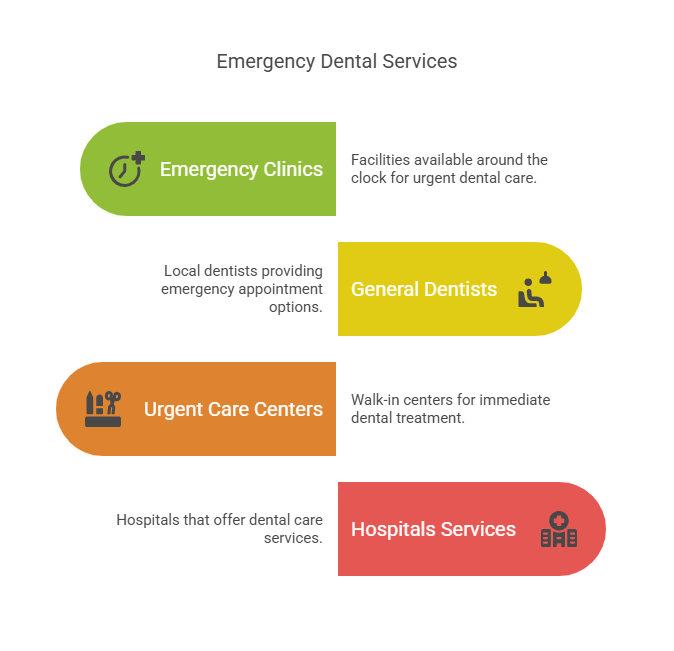
When searching for an emergency dentist open now in Weymouth, MA, consider these options:

  • 24/7 Emergency Dental Clinics
  • Local General Dentists Offering Emergency Appointments
  • Walk-in Dental Urgent Care Centers
  • Hospitals with Dental Services

Cost of Fixing a Chipped Front Tooth

The cost depends on the treatment required:

  • Dental bonding: $100 – $400 per tooth
  • Veneers: $500 – $2,500 per tooth
  • Crowns: $800 – $2,000 per tooth
  • Root canal & crown: $1,000 – $3,000
  • Extraction & implant: $3,000 – $5,000

Many dental offices accept insurance and offer payment plans.

People Also Ask

1. Can a chipped front tooth be fixed the same day?

Yes, minor chips can often be repaired in one visit with bonding or contouring.

2. How long does dental bonding last?

Bonding typically lasts 5–10 years with proper care.

3. What should I do if my chipped tooth is painful?

Take over-the-counter pain relievers, avoid hot/cold foods, and see a dentist immediately.

4. Can a chipped tooth get worse over time?

Yes, untreated chips can lead to further damage or infection.

5. Is a chipped front tooth a dental emergency?

Yes, especially if it causes pain, sensitivity, or exposes the tooth’s inner layers.

6. Will insurance cover chipped tooth repair?

Most insurance plans cover at least part of emergency dental treatments.

7. Can a chipped tooth be fixed without a dentist?

No, home remedies won’t permanently fix a chipped tooth—see a professional.

8. How long does it take to repair a chipped tooth?

Treatments like bonding take 30–60 minutes, while veneers or crowns require multiple visits.

9. Can I eat after fixing a chipped tooth?

Yes, but avoid hard, sticky, or crunchy foods for at least 24 hours.

10. What happens if I ignore a chipped tooth?

It may worsen, leading to decay, sensitivity, or even tooth loss.

FAQs

1. Where can I find an emergency dentist in Weymouth, MA?

Search online for “emergency dentist near me” or check local dental clinics.

2. What qualifies as a dental emergency?

Severe pain, broken teeth, infections, or bleeding require immediate care.

3. Do I need an appointment for emergency dental care?

Some offices accept walk-ins, but calling ahead ensures faster service.

4. What if my chipped tooth is bleeding?

Apply gauze and see an emergency dentist as soon as possible.

5. Can a chipped tooth be filed down?

Yes, minor chips can be smoothed out, but larger damage requires bonding or veneers.

6. How do I prevent chipped teeth?

Avoid biting hard objects, wear a mouthguard for sports, and maintain oral health.

7. What if my child chips a front tooth?

See a pediatric emergency dentist immediately.

8. Can a chipped tooth be whitened?

No, but bonding or veneers can restore color and shape.

9. How soon should I visit the dentist for a chipped tooth?

Immediately, especially if there’s pain or sensitivity.

10. Are there home remedies for a chipped tooth?

Temporary solutions like dental wax can protect the tooth, but professional treatment is necessary.

Conclusion

If you’re experiencing a chipped front tooth emergency in Weymouth, MA, seeking immediate dental care is crucial to prevent further damage. Whether you need bonding, veneers, or a crown, a qualified emergency dentist can restore your smile quickly and effectively. Don’t wait—contact an emergency dental provider today, please visit Comfort Dental Weymouth, 47 Washington St, Weymouth, MA 02188, (781) 337-3300.

Can Invisalign Straighten Teeth After Braces?

Many people who have had braces in the past may find that their teeth have shifted over time. If you’re wondering, “Can Invisalign straighten teeth after braces?” the answer is yes! Invisalign can effectively correct minor to moderate misalignments even after traditional braces. This guide will explore how Invisalign works post-braces, its benefits, and what you need to know before starting treatment.

Why Do Teeth Shift After Braces?

Even after orthodontic treatment, teeth can shift due to several factors, including:

  • Not wearing a retainer: Retainers help keep teeth in their corrected positions, but many people stop wearing them, leading to shifts.
  • Natural aging process: Teeth continue to move slightly as part of the aging process.
  • Teeth grinding or clenching: These habits can put pressure on teeth, causing them to move.
  • Gum disease or tooth loss: Changes in the structure of your mouth can lead to tooth misalignment.

How Invisalign Can Correct Teeth After Braces

1. Evaluating Your Teeth

An orthodontist will assess whether Invisalign is the right option based on the severity of misalignment. Mild to moderate shifting is typically treatable with Invisalign.

2. Customized Treatment Plan

A digital scan of your teeth is used to create a custom treatment plan with clear aligners designed to gradually shift teeth back into place.

3. Wearing the Aligners

Patients wear Invisalign aligners for 20–22 hours per day, changing to a new set every one to two weeks to achieve gradual movement.

4. Retaining Your Results

Once treatment is complete, wearing a retainer ensures your teeth remain in their corrected positions.

Benefits of Using Invisalign After Braces

  • Discreet Treatment: Clear aligners are nearly invisible compared to metal braces.
  • Comfortable Fit: No metal brackets or wires mean a more comfortable experience.
  • Removable Convenience: Eat, drink, and brush without restrictions.
  • Effective for Relapse Cases: Corrects post-braces shifting without the need for another round of traditional braces.

How Long Does Invisalign Take to Straighten Teeth After Braces?

The treatment timeline varies depending on the degree of shifting:

  • Mild cases: 3–6 months
  • Moderate cases: 6–12 months
  • Severe cases: May require longer treatment or an alternative approach

Cost of Invisalign After Braces

The cost of Invisalign depends on the complexity of the case and location. On average, prices range from $3,000 to $7,000. Some dental insurance plans may cover part of the treatment.

People Also Ask

1. Is Invisalign effective after braces?

Yes, Invisalign can correct minor to moderate tooth shifting after braces.

2. Can I switch from braces to Invisalign mid-treatment?

Yes, but your orthodontist must determine if it’s a suitable option based on your progress.

3. Will I need to wear a retainer after Invisalign?

Yes, wearing a retainer is crucial to maintaining your results.

4. How soon after braces can I get Invisalign?

If teeth shift post-braces, Invisalign can be started immediately upon recommendation by your orthodontist.

5. Can Invisalign fix gaps after braces?

Yes, Invisalign can close gaps that may have developed after traditional braces.

6. Is Invisalign cheaper than getting braces again?

It depends on the severity of the issue. Invisalign is often more affordable for minor adjustments.

7. Does Invisalign work faster than braces for post-treatment shifts?

In many cases, Invisalign works faster for minor corrections compared to full braces treatment.

8. Can Invisalign fix severe shifting after braces?

Severe cases may require alternative orthodontic solutions, such as traditional braces.

9. Will Invisalign be uncomfortable if I’ve had braces before?

Invisalign is generally more comfortable than metal braces, with less irritation.

10. Do I need new retainers after using Invisalign post-braces?

Yes, a new retainer will be custom-made to maintain your corrected teeth alignment.

FAQs

1. How do I know if I need Invisalign after braces?

If you notice shifting or gaps forming, consult your orthodontist for an assessment.

2. Can Invisalign move all my teeth back into place?

It depends on the severity of the misalignment. Invisalign is effective for mild to moderate cases.

3. What happens if I don’t treat teeth shifting after braces?

Teeth can continue to shift, leading to potential bite issues or cosmetic concerns.

4. Is Invisalign worth it after braces?

Yes, especially if you want a discreet and effective solution for teeth that have moved post-braces.

5. How long does Invisalign take for minor shifting?

Mild cases can be corrected in as little as 3–6 months.

6. Can Invisalign be used years after having braces?

Yes, even if it has been years since you had braces, Invisalign can still help correct shifting.

7. What are alternatives to Invisalign for post-braces teeth shifting?

Clear aligners from other brands, traditional braces, or minor dental procedures may be alternatives.

8. Will my insurance cover Invisalign if I already had braces?

Some plans cover part of the cost, but coverage varies. Check with your provider.

9. Can I eat normally with Invisalign?

Yes, since Invisalign is removable, you can eat whatever you like—but remember to clean your aligners afterward.

10. Can Invisalign correct an overbite or underbite after braces?

Invisalign can correct mild cases, but severe bite issues may require additional orthodontic treatment.

Conclusion

If you’re wondering, “Can Invisalign straighten teeth after braces?” the answer is a resounding yes! Whether you have minor shifts or moderate misalignment, Invisalign offers a discreet and effective way to restore your smile. Consult with an orthodontist to determine if Invisalign is the right solution for you! If you are searching dentists near Weymouth MA, please visit Comfort Dental Weymouth, 47 Washington St, Weymouth, MA 02188, (781) 337-3300.

Emergency Root Canal Dentist Open Now

Experiencing severe tooth pain or a dental emergency in Weymouth, MA? You may need an emergency root canal dentist open now to relieve pain and save your tooth. This guide covers everything you need to know about emergency root canals, finding the right dentist, and what to expect during the procedure.

What is an Emergency Root Canal?

A root canal is a dental procedure that removes infected or damaged pulp from a tooth to relieve pain and prevent further infection. An emergency root canal is performed when a patient is in severe pain due to an infection, deep cavity, or injury.

Signs You Need an Emergency Root Canal

  • Severe, persistent toothache
  • Sensitivity to hot or cold temperatures
  • Swollen or tender gums
  • A pimple-like bump on the gums
  • Darkening or discoloration of the tooth
  • Pain when chewing or biting

Finding an Emergency Root Canal Dentist Open Now in Weymouth, MA

How to Search for Emergency Dental Care

If you need urgent dental care in Weymouth, MA, follow these steps:

  1. Search online for “emergency root canal dentist open now in Weymouth, MA.”
  2. Call local dental offices and check if they offer emergency services.
  3. Visit urgent dental clinics specializing in same-day root canals.
  4. Check with your insurance provider for covered emergency dentists.
  5. Look for 24-hour dental services if the emergency happens at night.

What to Expect During an Emergency Root Canal

1. Initial Examination and X-Rays

The dentist will examine your tooth and take X-rays to assess the severity of the infection or damage.

2. Administering Anesthesia

A local anesthetic is used to numb the affected area to ensure a painless procedure.

3. Removing the Infected Pulp

The dentist will create an opening in the tooth and remove the infected or damaged pulp using specialized tools.

4. Cleaning and Sealing the Tooth

Once the pulp is removed, the tooth is cleaned, disinfected, and sealed to prevent future infection.

5. Placing a Temporary or Permanent Crown

A temporary filling may be placed until a permanent crown is added for protection.

Cost of an Emergency Root Canal in Weymouth, MA

Factors That Affect the Cost

  • The severity of the infection
  • The location of the tooth (molars cost more than front teeth)
  • Whether a crown is needed
  • Dental insurance coverage

Estimated Price Range

  • Without insurance: $800 – $1,500
  • With insurance: $200 – $600 (depending on coverage)

“People Also Ask” Questions About Emergency Root Canals

1. Can I go to the ER for a severe tooth infection?

Yes, but ER doctors can only provide pain relief and antibiotics. You’ll still need a dentist for a root canal.

2. How long can I wait before getting a root canal?

Delaying a root canal can worsen the infection and may lead to tooth loss or serious health complications.

3. Are emergency root canals painful?

With local anesthesia, the procedure is generally painless. Pain relief is immediate after the infected pulp is removed.

4. What happens if I don’t get a root canal?

The infection may spread, leading to abscesses, severe pain, and possible tooth loss.

5. How long does an emergency root canal take?

Typically 60–90 minutes, depending on the tooth’s complexity.

6. What’s the fastest way to relieve root canal pain before treatment?

Use pain relievers, cold compresses, and saltwater rinses to reduce discomfort.

7. Can a root canal be done in one visit?

Yes, many emergency dentists offer same-day root canals.

8. Will I need antibiotics after a root canal?

Only if the infection is severe or has spread beyond the tooth.

9. Is it better to get a root canal or pull the tooth?

A root canal saves your natural tooth, which is better for long-term oral health.

10. Can I drive home after a root canal?

Yes, unless sedation is used. In that case, arrange for someone to drive you home.

FAQs About Emergency Root Canal Dentists

1. How do I find a 24-hour emergency root canal dentist in Weymouth, MA?

Search online directories, urgent care clinics, or call local dentists for after-hours services.

2. Can I get an emergency root canal without insurance?

Yes, many dentists offer payment plans or financing options.

3. How do I know if my tooth infection is serious?

If you have swelling, fever, or difficulty breathing, seek urgent care immediately.

4. Will my dental insurance cover an emergency root canal?

Most insurance plans cover root canals, but coverage varies.

5. Can I go to a general dentist for an emergency root canal?

Yes, but some cases may require a specialist (endodontist).

6. What should I do after an emergency root canal?

Follow your dentist’s post-care instructions, avoid hard foods, and maintain oral hygiene.

7. Can I eat after a root canal?

Wait until the numbness wears off, then start with soft foods.

8. How long does it take to recover from a root canal?

Most patients recover within a few days, but minor discomfort may last up to a week.

9. How can I prevent needing a root canal in the future?

Brush and floss daily, visit your dentist regularly, and avoid sugary foods.

10. What if my pain doesn’t go away after a root canal?

Contact your dentist—lingering pain may indicate complications requiring further treatment.

Conclusion

If you need an emergency root canal dentist open now in Weymouth, MA, act fast to prevent complications. Look for 24/7 emergency dental care, and don’t ignore persistent tooth pain. With prompt treatment, you can relieve pain and protect your smile! If you are searching for emergency dentist nearby in Weymouth, don’t wait—contact a trusted emergency dentist today, please visit Comfort Dental Weymouth, 47 Washington St, Weymouth, MA 02188, (781) 337-3300.